−32%
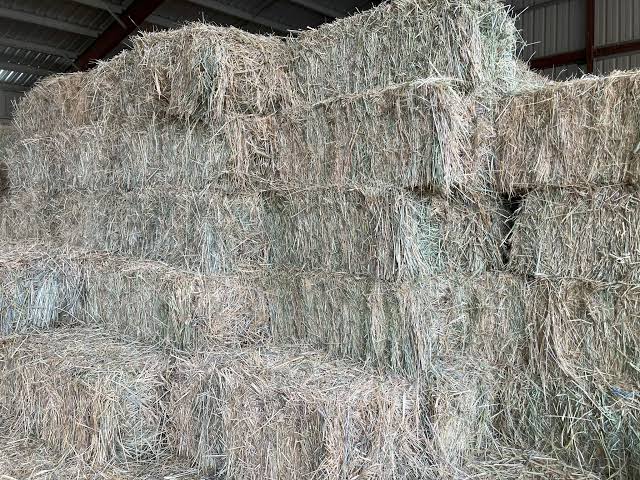
Smooth Brome — 2nd Cut
Brome · 2nd Cut · Small Square
$70
$103
per bale
Now shipping nationwide
Selected lots
Hand-picked from the lots we'd feed our own stock. Probe-tested, barn-stored and ready to ship.
Brome · 2nd Cut · Small Square
$70
$103
per bale
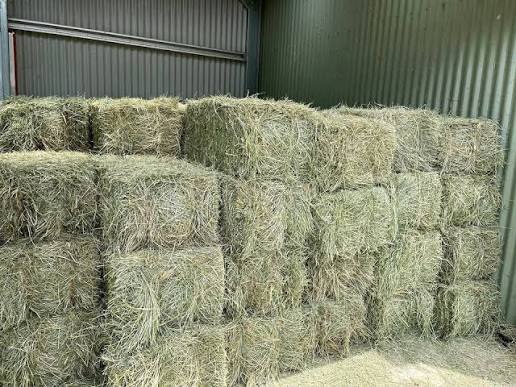
Teff · 2nd Cut · Small Square
$60
per bale
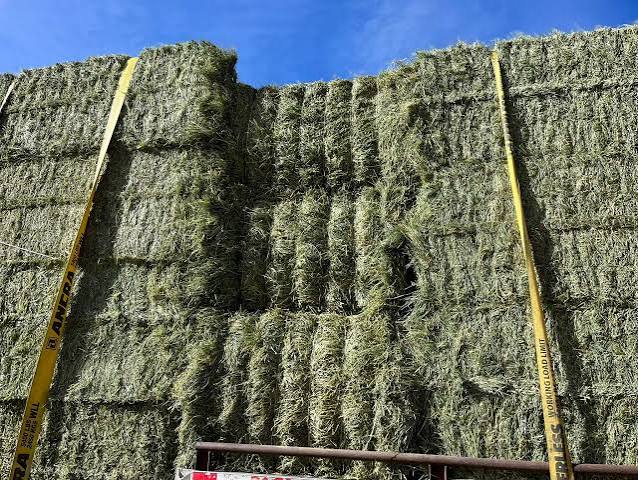
Alfalfa · 3rd Cut · Large Square
$70
per bale
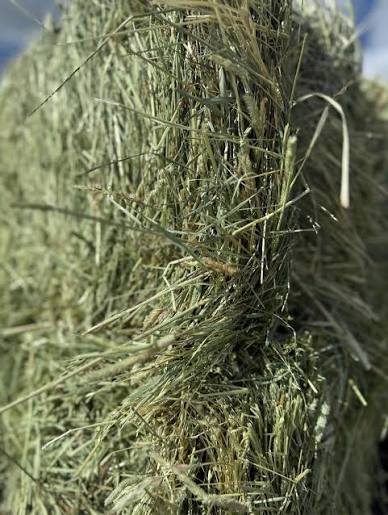
Timothy · 2nd Cut · Small Square
$65
$101
per bale
By forage type
Protein, fibre and moisture shift with the grass, the cutting and the season. If you're unsure, start here.
Timothy, orchard and bermuda — soft, low-protein forage for everyday feeding.
Shop
Clean wheat and barley straw for stalls, coops and pens.
Shop
High protein, high calcium. Fed as part of a ration for performance animals and hard keepers.
Shop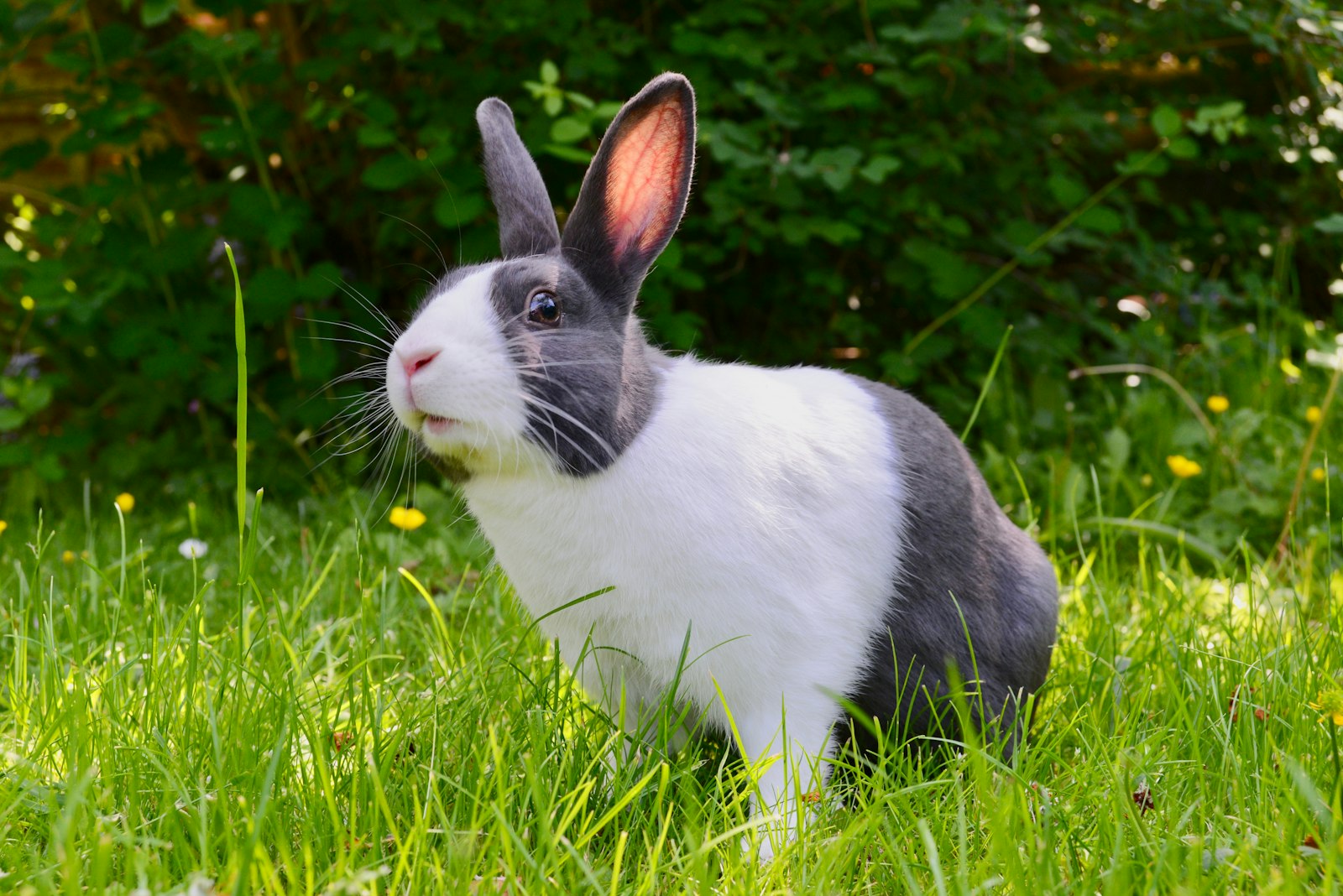
Hand-sorted, dust-extracted forage for rabbits, guinea pigs and chinchillas.
Shop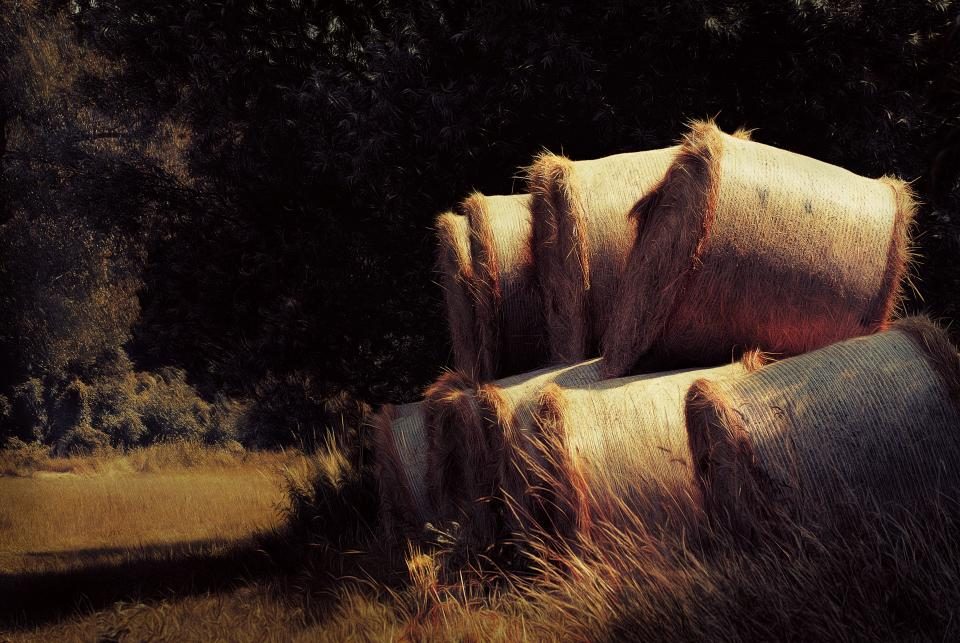
From the barn
Two bales of timothy off the same farm can be a world apart depending on when they were cut, how fast they dried and where they spent the winter. We publish the cut, the harvest year, the protein and the moisture for every lot, so you are buying a known quantity rather than a photograph.
Everything ships out of covered storage on pallets, strapped and wrapped. If a load arrives wet or mouldy, we replace it.
Cut pre-bloom, before the stem goes woody and the seed head takes over. Leaf retained, stem fine, colour green all the way to the core of the bale.
Every lot is probe-sampled for protein and moisture before it leaves the barn. The numbers on the listing are the numbers you get.
Small squares go LTL on pallets, large squares and rounds move by flatbed. Delivery windows confirmed within one business day.
Ordering
No account, no deposit, no haggling. Four steps from the listing to the barn.
Every listing shows the cut, harvest year, protein and moisture, so you are choosing a known quantity rather than a photograph.
No sign-up, no password. Give us a delivery address and a number to reach you on, and the cart does the rest.
Within one business day we come back with a delivery window and the invoice. Nothing is charged on the site.
Strapped and wrapped on pallets, or flatbed for large squares and rounds. Wet or mouldy on arrival, we replace it.
Customer reviews
“I have bought timothy from four suppliers in six years and this is the first time the second cut has actually looked like second cut. Fine stem, leaf still on it, and green right through the middle of the bale rather than just on the outside.”
Not sure what to buy?
A starting point, not a prescription. Tell us the animal and the workload and we will narrow it down properly.
| Animal | Start with | Target protein | Notes |
|---|---|---|---|
| Horse at maintenance | Timothy, orchard, meadow mix | 8–11% | Free choice or 1.5–2% of bodyweight daily. |
| Horse in hard work | Timothy with alfalfa topper | 11–14% | Add legume rather than grain where you can. |
| Laminitic or insulin-resistant | Teff | 9–11% | Low NSC is what matters here, not protein. |
| Broodmare, in foal | Endophyte-free fescue, alfalfa | 12–18% | Never feed endophyte-infected fescue to in-foal mares. |
| Beef cattle, wintering | Bermuda rounds, meadow mix | 8–11% | Round bales in a ring feeder cut waste sharply. |
| Dairy cattle & goats in milk | Alfalfa | 16–20% | Protein and calcium drive yield. |
| Rabbits, guinea pigs, chinchillas | Small-animal timothy | 8–10% | Unlimited grass hay. Alfalfa only for growing young. |
| Alpaca & llama | First-cut grass hay | 9–11% | Too much protein shows up in the fleece. |
Fresh off the field
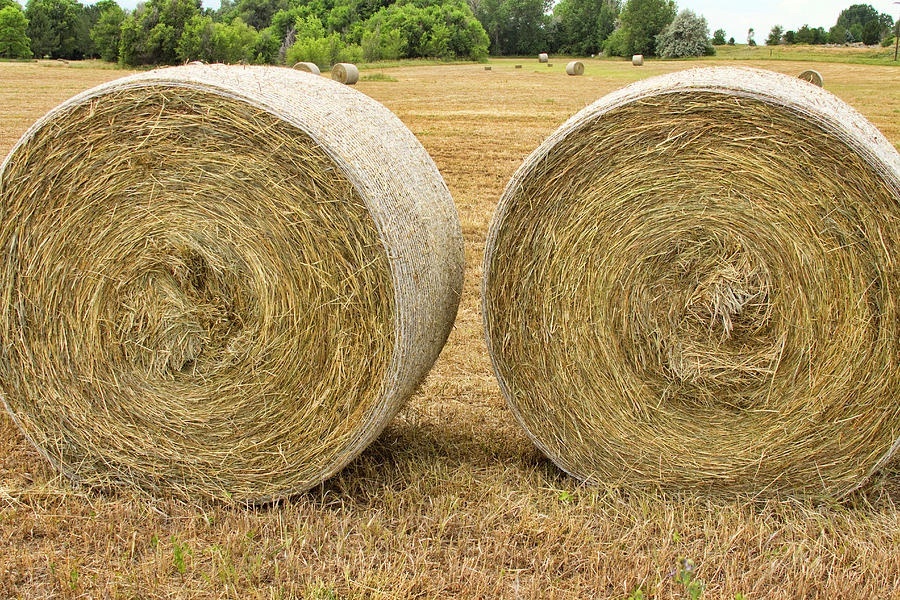
Fescue · 1st Cut · Small Square
$72
per bale
Brome · 2nd Cut · Small Square
$70
$103
per bale
Teff · 2nd Cut · Small Square
$60
per bale
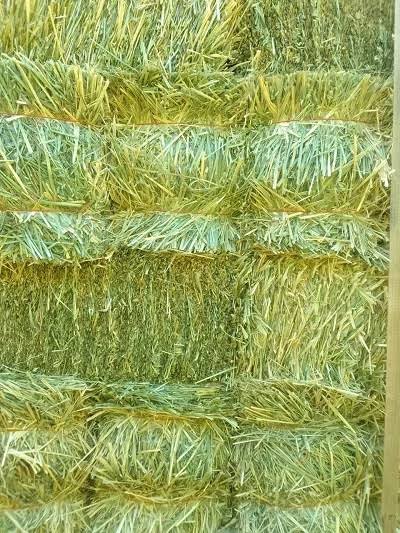
Oat · 1st Cut · Large Square
$62
per bale
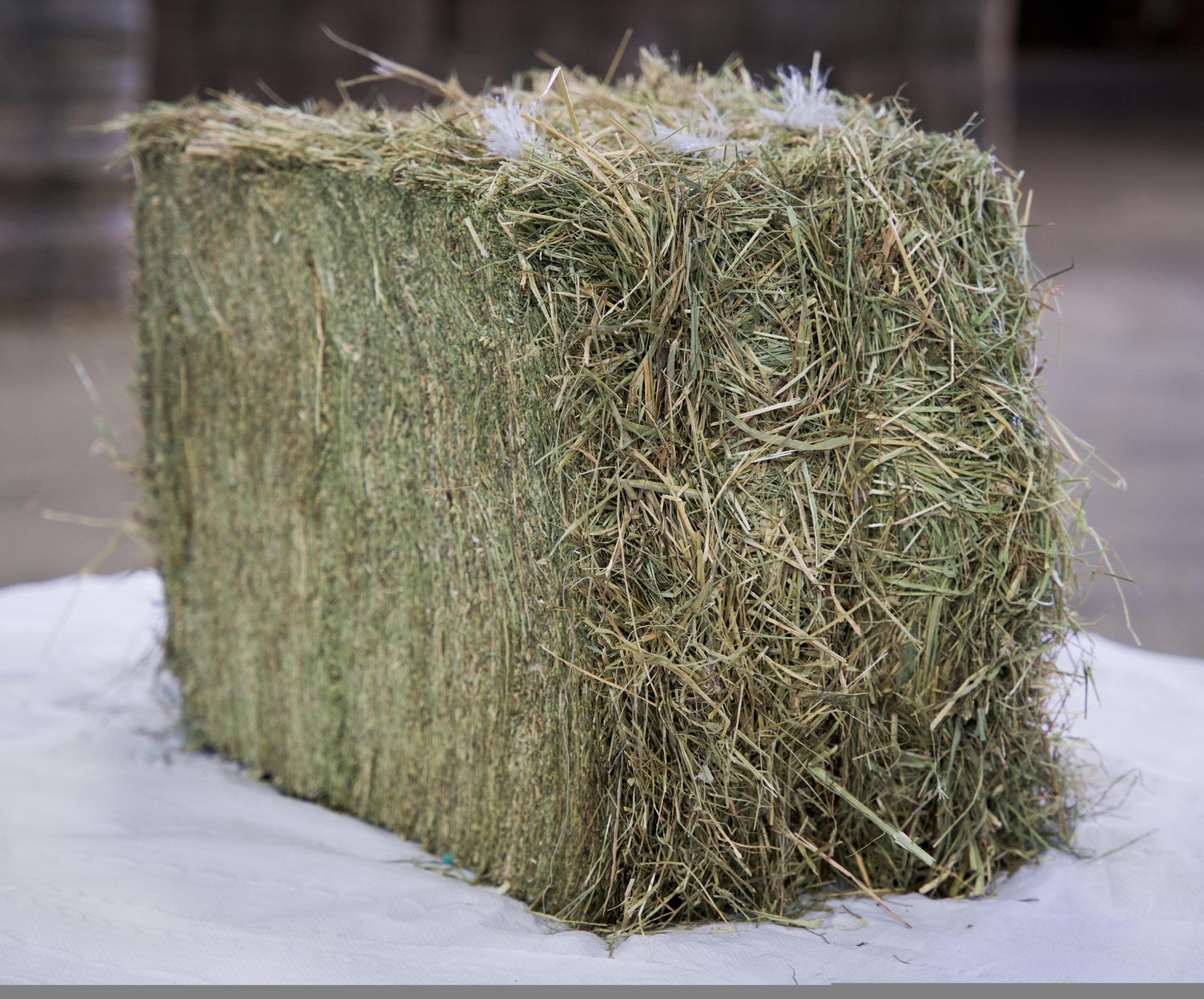
Meadow Grass · 1st Cut · Small Square
$68
$78
per bale
Alfalfa · 3rd Cut · Large Square
$70
per bale
Timothy · 2nd Cut · Small Square
$65
$101
per bale
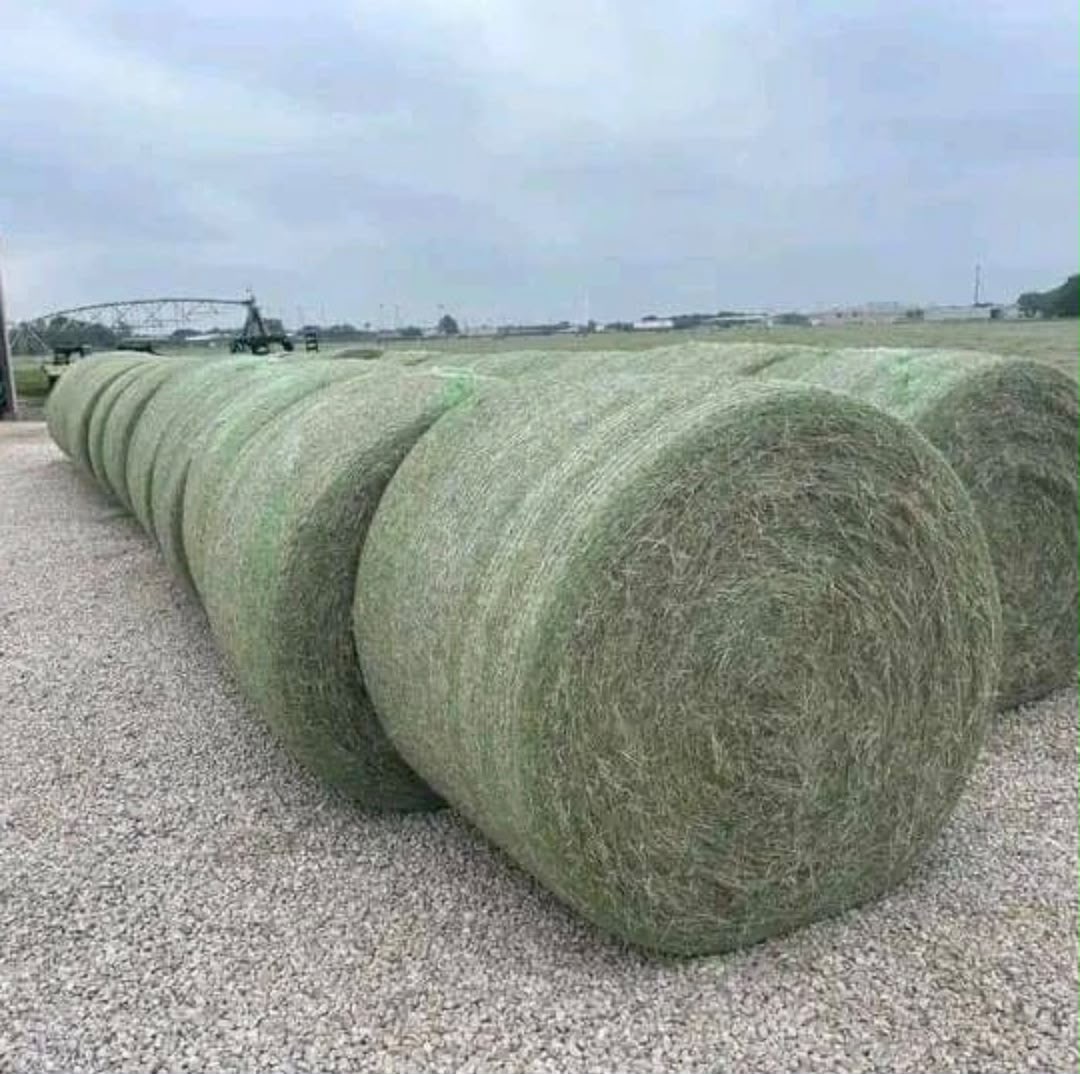
Bermuda · 2nd Cut · Round
$75
$84
per bale
Before you order
First cut is coarser and stemmier with more seed head — good value, higher fibre. Second cut is finer and leafier with more protein. Third cut is the softest and richest, and is usually fed as part of a ration rather than free choice.
All three are grass hay in the 8–12% protein range, so the choice is mostly about stem and palatability. Timothy is the standard for horses in light to moderate work. Orchard grass is softer and a little higher in protein, which helps with picky eaters. Bermuda is finer-stemmed and the most economical per ton for pasture feeding.
Small squares are typically 20–27 kg, large squares 300–350 kg and 4x5 rounds around 450–500 kg. The exact weight for each lot is on its product page.
Off the ground on pallets, under cover, with air moving around the stack. Hay baled dry will hold its colour and feed value for well over a year stored that way. Stacked on bare concrete in a damp shed it will mould from the bottom up.
Feeding more than a few head?
Reserve from a standing crop and we’ll hold your lots through the season at a fixed rate, delivered on a schedule you set.
Request a quote